

Train Your Brain in Minutes
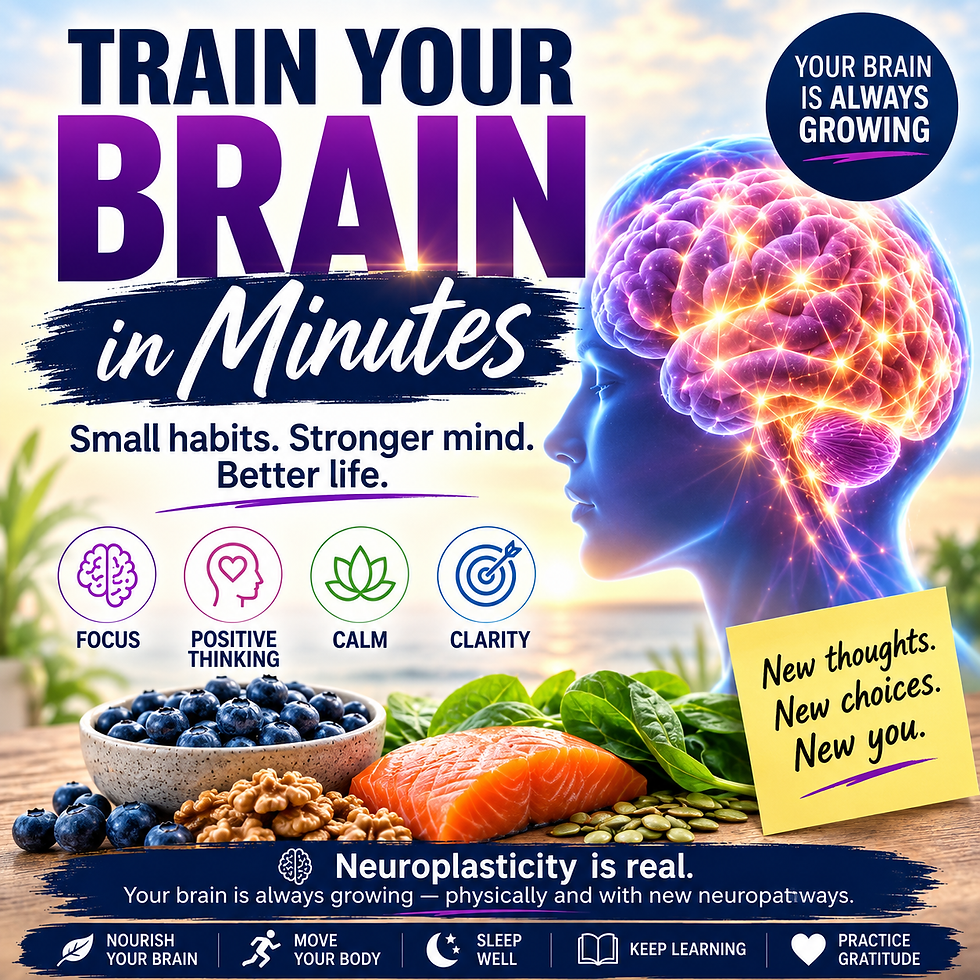
Most people believe change takes months or years. They think confidence, happiness, focus, or motivation will eventually arrive if they just work harder or wait for life to improve. But neuroscience tells us something different. Your brain is constantly adapting to whatever you repeatedly pay attention to. Even a few intentional minutes can begin changing the direction of your thoughts, emotions, and behaviors.
The gap between where you are today and where you want to be is rarely a lack of intelligence or ability. More often, it's a difference in mental patterns. Stress, distraction, and old habits keep your brain repeating yesterday's programming. When you learn how to interrupt those patterns, you create an opportunity to respond differently instead of reacting automatically.
Think of your brain like a GPS. If you're one degree off course, you may not notice it today, but over time you'll end up miles from your intended destination. The same is true for your thoughts. Small shifts in attention, gratitude, focus, or perspective may seem insignificant in the moment, yet they compound into remarkable changes over weeks and months.
Scientists call this ability to adapt neuroplasticity—your brain's remarkable capacity to reorganize itself by forming and strengthening new neural connections throughout your life. Every time you learn a new skill, challenge an old belief, practice gratitude, solve a problem, or repeat a healthy habit, you're reinforcing pathways that make those behaviors easier in the future. Your brain isn't fixed; it's a living organ that continually remodels itself in response to how you think, move, and live.
You can support this natural process every day. Feed your brain with nutrient-rich foods like blueberries, leafy greens, walnuts, pumpkin seeds, eggs, olive oil, and omega-3-rich fish such as salmon or sardines. Exercise regularly to increase blood flow and stimulate brain-derived neurotrophic factor (BDNF), often called "fertilizer for the brain."
Prioritize quality sleep, stay hydrated, challenge yourself to learn something new, and spend a few intentional minutes each day focusing on what you want to become rather than what you fear. Your brain is always listening, always adapting, and always building new pathways. The question isn't whether your brain can change—it's whether you're giving it the right signals to grow.



Comments